
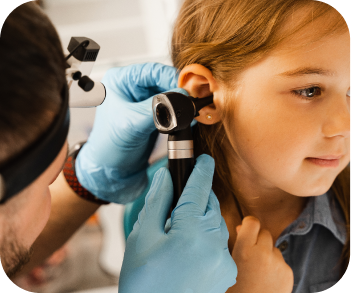
We strongly recommend that every child undergo a hearing check before they begin primary school. If your child shows signs that may suggest hearing difficulties—such as trouble focusing, failing to respond when spoken to, speaking at a high volume, unclear speech, or falling behind academically—it’s important to have their hearing evaluated. Early detection and treatment play a vital role in supporting a child’s growth and development.
We recognize that every child is different, so we tailor each hearing test to suit their individual needs and abilities. The assessment includes a thorough examination of the ears, followed by the most appropriate testing approach based on the child’s age and developmental stage.
For younger children, we often use Play Audiometry, a method that turns hearing assessment into a fun, game-like activity. This interactive approach keeps children engaged and cooperative, allowing us to accurately measure their hearing while they enjoy the process.
For older children who can follow directions reliably, we may use Pure-Tone Audiometry. This involves the child wearing headphones and listening for a range of sounds. When they hear a tone or beep, they’ll either raise their hand or press a button. This helps us identify their hearing thresholds across different sound frequencies.
Depending on the child’s age and comfort level, we may also include additional assessments such as speech testing and tympanometry. Speech testing evaluates their ability to hear, understand, and repeat spoken words. Tympanometry, on the other hand, measures how well the eardrum responds to slight changes in air pressure, giving us insights into middle ear function.
Our goal is to provide a calm, welcoming, and child-friendly space where your child can feel relaxed throughout the entire process. We take care to adjust our methods to best suit your child’s comfort and cooperation level, ensuring the experience is as smooth and positive as possible.